
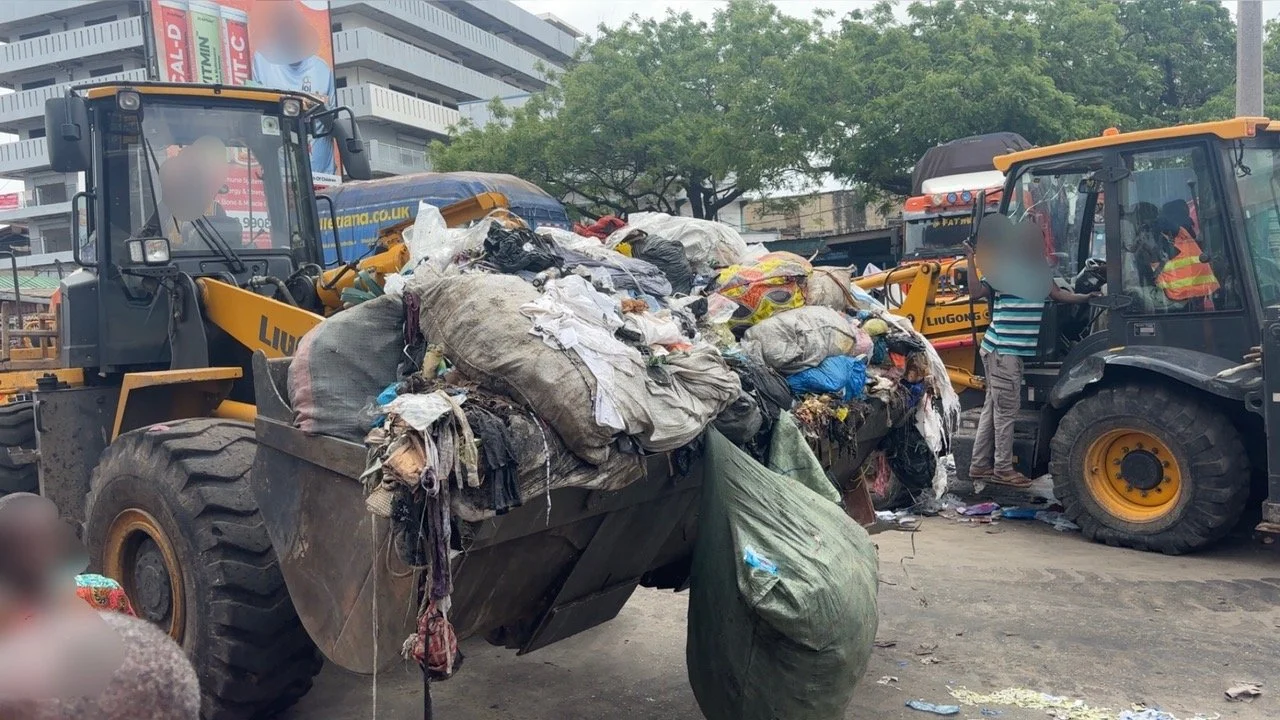
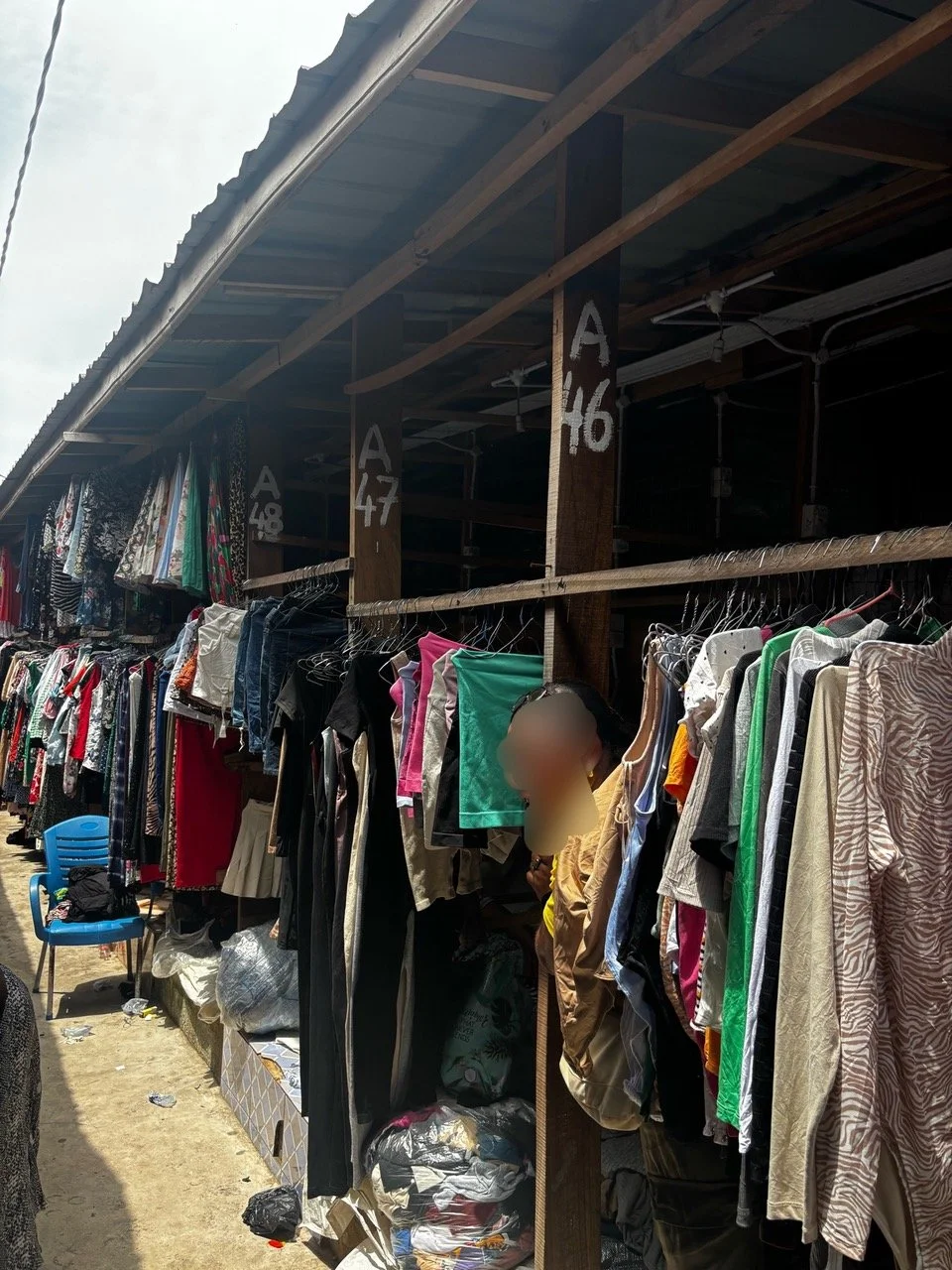
This project traces that journey. It examines how Canadian textile reuse organizations talk about their sustainability commitments and how open they are about what happens to the items they can't sell. It then follows the chain to Accra, Ghana, one of the world's largest importers of second-hand clothing. The team has conducted interviews and participant observation in Accra/Ghana, at Kantamanto Market, one of the biggest second-hand clothing markets in the world, and in the nearby community of Old Fadama. It also established contacts to The Or Foundation, which works in Ghana to confront the fashion industry's social and environmental harms and to strengthen the agency of workers and local communities.
Our goal is to understand how these clothes circulate, or whether they are used or thrown away? The project also shows how practices seen as sustainable or charitable can feed waste colonialism and environmental racism, pushing the costs of consumption onto racialized communities elsewhere. By following clothing from Canada to Ghana, the team aims to reveal the links between fashion shop’s public outlook in the Global North and the places where part of these unsold or used cloth ends up in the Global South. We also hope to push the debate on circularity towards taking environmental justice seriously.
Sustainable for whom? The waste colonialism hidden in the narratives of thrift stores
Research team: Jutta Gutberlet, UVic / Patricia USP - University of São Paulo, Brazil / Wuni Wuntah, UVic / Hazim Ismail, UVic
Donating clothes feels like an act of generosity and environmental care. But where do those clothes go? People are buying more clothing than ever and wearing it for less time. Under pressure to become sustainable, the fashion industry has adopted the language of circularity and now presents resale and second-hand exports as solutions. Recent investigations such as Bins for Profit (Charity Intelligence Canada, 2024)[1] tell a different story: much of the clothing donated in Canada doesn't stay in the country. It's shipped to the Global South, where many garments arrive damaged or unwanted and quickly become waste.
References:
[1] Charity Intelligence Canada. (2024, October 22). Bins for profit: How your donated clothing ends up in Africa. https://www.charityintelligence.ca/research-and-news/ci-views/33-donor-giving/764-bins-for-profit-how-your-donated-clothing-ends-up-in-africa